In the realm of automation solutions, "Semi Rotary Actuators" play a pivotal role. These devices bridge the gap between full rotation and linear motion. Their design enhances efficiency and versatility, making them invaluable in various applications, from robotics to conveyor systems.
Choosing the right actuator can be daunting. The market offers numerous options, each with unique specifications and features. Companies need expertise to navigate these choices. A suboptimal selection can lead to increased costs and operational challenges. Industry professionals understand the complexity involved in integrating semi rotary actuators into existing systems.
As we delve into the top 10 semi rotary actuators, it’s crucial to assess their capabilities critically. Here, we highlight key players in the market. Each actuator brings distinct advantages, but none are perfect. Reflect on how the right actuator can elevate automation processes while acknowledging the potential limitations and challenges that may arise.
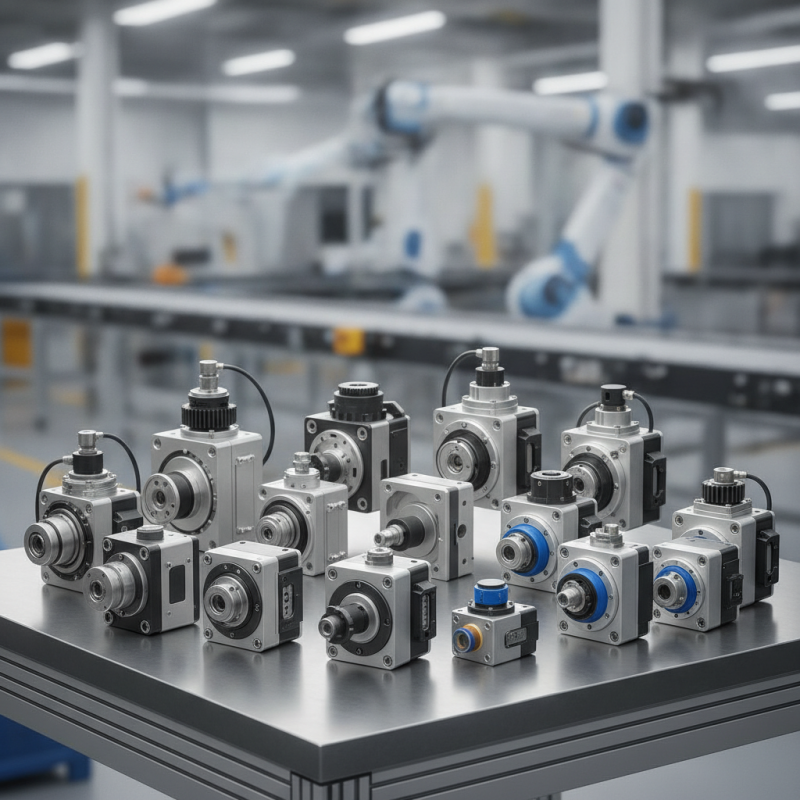
Semi rotary actuators are vital components in automation technology. They provide precise movement for various applications. These actuators combine the principles of rotary and linear motion, achieving versatility in design. They typically feature a limited rotational angle, often up to 270 degrees. This makes them ideal for tasks such as clamping, indexing, and positioning.
According to a research report by Research and Markets, the market for rotary actuators is expected to grow at a CAGR of approximately 6% from 2023 to 2028. This growth highlights their increasing importance in sectors such as manufacturing and robotics. Semi rotary actuators offer energy efficiency and high torque, making them preferred choices for modern automation systems. Their design often results in simplicity and reliability, yet there can be challenges related to load capacity and backlash.
When considering semi rotary actuators, assessing their installation and compatibility is crucial. Factors like environmental conditions can impact performance. Experts recommend a thorough evaluation of these conditions. A flawed choice might lead to operational inefficiencies. Ongoing industry feedback emphasizes the need for continuous innovation in actuator designs. This is essential for addressing the evolving demands of automation solutions.
When selecting semi rotary actuators for automation solutions, several key features warrant attention. Torque capacity is crucial. It determines how much load the actuator can handle. A higher torque rating generally means better performance in demanding tasks. Additionally, speed is a significant factor. It affects how quickly the actuator can respond to commands. In various applications, speed may need to be adjustable.
Another important feature is the control mechanism. Options include pneumatic, hydraulic, or electric control. Each has distinct advantages, depending on the application requirements. Integration simplicity with existing systems can ease installation. This makes it vital to check compatibility with other components. Durability is also essential. Actuators should withstand varying environmental conditions and heavy use.
Lastly, consider the maintenance requirements. Some actuators demand regular checks, while others can run without much oversight. Assessing the operational environment will inform choices. The ideal actuator is one that balances these features effectively. Keeping in mind potential flaws can lead to better decision-making. Understanding these nuances ensures a more reliable automation process.
Semi rotary actuators are essential for a variety of automation solutions. They offer precise control and efficiency in motion applications. These actuators can simplify tasks in manufacturing, robotics, and other industrial settings. Their ability to perform partial rotations allows for versatile use in tight spaces.
When selecting a semi rotary actuator, consider the torque, speed, and duty cycle. Each application may require different specifications. It’s important to analyze the intended use. Some may prioritize speed over power, while others need a balance. Do not overlook the environmental conditions. For instance, a humid environment can affect performance.
Tips: Ensure compatibility with existing systems. Double-check dimensions and connection options. Always review product specifications to avoid mismatches. Testing in actual conditions can unveil unexpected challenges. Remember, not all products perform uniformly.
Quality assurance is key. Look for actuators that have undergone rigorous testing. Certifications can indicate reliability. However, be aware that even top-rated products can have limitations. User feedback often highlights areas for improvement. Staying informed about advancements can optimize your automation setup.
Semi-rotary actuators are pivotal in various automation applications. They provide motion control while minimizing space and energy usage. Industries like packaging, automotive, and robotics often utilize these actuators for their efficiency. For example, in packaging, these devices control the movement of lids and seals with precision, enhancing productivity.
In automotive assembly lines, semi-rotary actuators aid in tasks such as the alignment and fastening of components. Their ability to operate swiftly and reliably reduces downtime. Users favor them for tasks that require specific angular movements. Moreover, in robotics, these actuators play a crucial role in achieving complex motion sequences.
**Tip:** Evaluate the torque requirements before choosing an actuator. Underestimating torque can lead to inefficiencies.
Another application is in material handling systems. Here, semi-rotary actuators can control gates and conveyor systems effectively. Their compact design allows for easy integration into existing setups. Precision is key, yet users must monitor performance to avoid wear.
**Tip:** Regular maintenance checks can extend the life of actuators. Inspect for signs of fatigue regularly.
Despite their advantages, users may face challenges with positioning accuracy. Therefore, continuous monitoring is essential. Adjustments may be required to maintain optimal performance levels. Understanding the unique requirements of each application will enhance the overall effectiveness of these devices.
Semi rotary actuators play a crucial role in industrial automation. They offer unique solutions for a variety of applications. These actuators convert rotational motion into linear motion, making them versatile. They integrate seamlessly with different machines. Their use is widespread, from assembly lines to robotic applications.
When analyzed, the choice of a semi rotary actuator must consider several factors. Torque output is a primary concern. Applications vary in power needs. Some may require high torque while others need precision. Speed can also differ, affecting productivity. Another aspect is reliability. Actuators must withstand harsh environments without failure. However, selecting the right actuator can be challenging. Users might overlook essential specifications, leading to inefficiencies.
Furthermore, installation and maintenance are crucial. Many users underestimate the technical know-how needed. Misalignment can cause significant wear over time. This oversight can affect overall performance. Choosing the right actuator should involve a careful evaluation. Understanding the specific requirements of each industrial application is essential. Each choice can significantly impact efficiency and overall system performance in the long run.
This chart displays the comparative analysis of the top 10 semi rotary actuators based on their torque ratings and operational speed, which are critical for efficient automation in industrial applications.
: A semi-rotary actuator provides precise control in motion applications, enabling partial rotations for versatile use.
Consider torque, speed, and duty cycle to match your application’s requirements effectively.
Humid conditions can affect performance. Always evaluate environmental factors during selection.
Testing in actual conditions reveals potential challenges that specifications alone may not highlight.
Conduct regular checks for fatigue and wear to maintain performance and longevity.
Positioning accuracy issues require continuous monitoring and adjustments for optimal performance.
They control movements precisely in tasks like sealing, which enhances productivity significantly.
Underestimating torque needs can lead to inefficiencies, impacting overall application effectiveness.
Yes, their compact design allows easy integration, but compatibility must be verified.
Rigorous testing and certifications indicate reliability, but even top-rated products have limitations.
The article "Top 10 Semi Rotary Actuators for Efficient Automation Solutions" provides a comprehensive overview of semi rotary actuators, highlighting their definition and functionality in automated systems. These actuators are essential for converting rotary motion into linear motion in various applications. The article outlines key features to consider when selecting a semi rotary actuator, such as torque, speed, and precision, ensuring users make informed decisions.
Additionally, the article reviews the top ten semi rotary actuators, detailing their specifications and performance metrics, which aids in comparative analysis for industrial use. Furthermore, it explores the myriad applications of semi rotary actuators across different sectors, emphasizing their role in enhancing operational efficiency and automation solutions. This informative guide is invaluable for professionals seeking to improve automation processes with reliable semi rotary actuators.