Top 10 Fast Rotary Actuator Suppliers Worldwide?

Time:2026-10-24 Author:Mason
0%

Selecting the right Fast Rotary Actuator supplier requires more than comparing catalog prices. Real performance depends on torque, rotation speed, repeatability, backlash, duty cycle, and installation conditions. A compact actuator may perform well on a laboratory bench, yet struggle beside a dusty packaging line or a high-cycle assembly cell.

Joseph Engelberger, widely recognized as the father of industrial robotics, once said, “I can’t define a robot, but I know one when I see one.” His observation remains useful here. A capable supplier should demonstrate practical engineering, not only attractive specifications. This includes clear load calculations, reliable test data, responsive technical support, and replacement planning. It also includes honest limitations.

Performance comes first.

This Top 10 Fast Rotary Actuator Suppliers Worldwide guide examines manufacturers through an engineering-focused lens. It considers product breadth, precision, operating life, control compatibility, customization, certifications, delivery capability, and after-sales service. Several suppliers stand out for advanced servo systems. Others offer dependable pneumatic or electric solutions for simpler automation tasks.

The ranking is not absolute. Supplier claims may use different testing methods, and regional support can change the purchasing decision. A company with excellent global products may not serve every local market effectively. Buyers should verify actual cycle requirements, environmental exposure, mounting space, and maintenance access before choosing.

That caution matters. The fastest actuator is not always the best actuator. A balanced decision can reduce downtime, protect equipment, and improve production consistency.
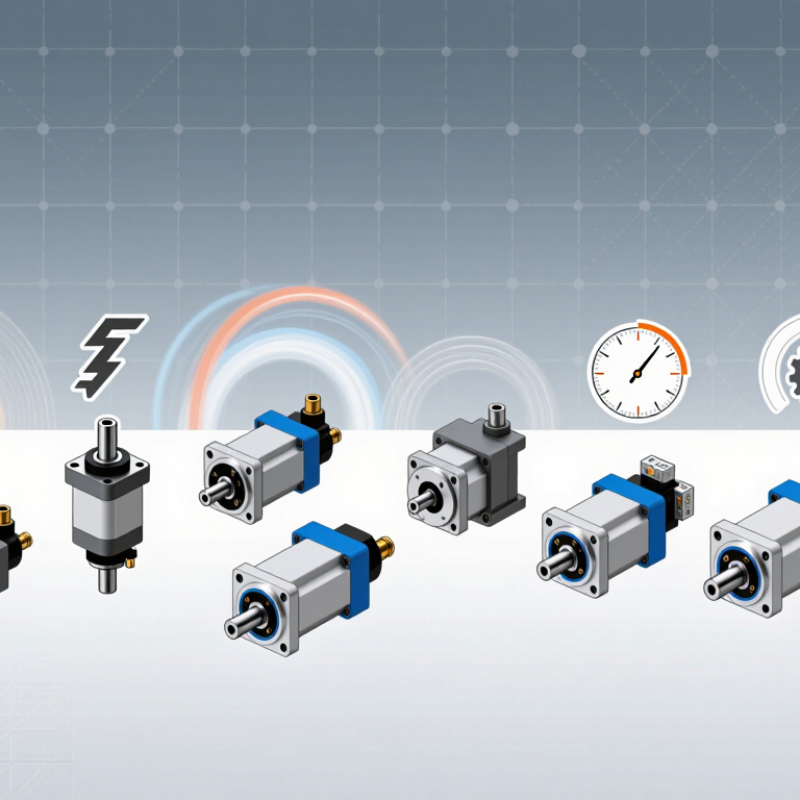
Top 10 Fast Rotary Actuator Suppliers Worldwide?

What Defines a Fast Rotary Actuator?

What Defines a Fast Rotary Actuator?

A fast rotary actuator converts supplied energy into controlled angular movement. Speed alone does not define performance. Engineers also measure acceleration, repeatability, backlash, torque stability, and settling time. ISO 9283 recommends evaluating robot performance through repeatability, pose accuracy, and stabilization behavior. These measures matter during rapid indexing or pick-and-place cycles.

A practical example is a 90-degree rotation completed in 0.08 seconds. That figure means little without the payload, inertia, pressure, and mounting position. A small actuator may move quickly without a load, then lose speed beside a heavy gripper. I have seen specifications hide this gap. Dynamic testing under real loads is more trustworthy than a headline number.

Demand for responsive motion is growing. The International Federation of Robotics reported 541,302 industrial robots installed worldwide in 2023, with the operating stock exceeding 4.2 million units. This expansion increases pressure on actuator suppliers to deliver compact, repeatable, and energy-efficient motion. However, faster movement can increase vibration, heat, and maintenance needs. Designers should compare cycle time, duty rating, braking behavior, and service life together. A top supplier should provide test conditions, not only maximum rotational speed. Some data sheets remain vague. That deserves careful questioning.

How Fast Rotary Actuators Work and Where They Are Used

Fast rotary actuators convert compressed air, hydraulic pressure, or electrical energy into controlled angular movement. Unlike linear actuators, they rotate shafts through a defined angle, such as 90 or 180 degrees. Internal vanes, racks, gears, or motor-driven mechanisms create torque. Position sensors can confirm the shaft angle during each cycle.

Speed depends on torque, load inertia, air pressure, voltage, friction, and control settings. A lightweight valve may rotate quickly, while a large gripper needs slower acceleration. In factory testing, engineers often adjust flow controls gradually. Excessive speed can cause vibration, seal wear, or inaccurate positioning. Fast is not always better.

These actuators operate in robotic grippers, packaging lines, indexing tables, material-handling systems, and automated valves. Food-processing equipment may require corrosion-resistant housings and easy cleaning. Dusty workshops need better sealing. Suppliers should provide torque curves, cycle-life data, response times, and clear maintenance guidance. Check those documents carefully. Some published speed figures assume no external load, which can mislead equipment designers. I would also compare noise, emergency stopping behavior, spare-part access, and service support across the leading worldwide suppliers. Performance on a test bench may differ sharply from performance beside a hot, vibrating production line.

Key Criteria for Evaluating Global Actuator Suppliers

Top 10 Fast Rotary Actuator Suppliers Worldwide?

Choosing among ten global fast rotary actuator suppliers requires more than comparing catalog torque. Application evidence matters. Request measured speed, acceleration, backlash, repeatability, and duty-cycle results under realistic loads. A laboratory peak value may collapse when heat builds inside a compact housing.

The 2024 World Robotics report recorded 541,302 industrial robot installations in 2023, showing continued demand for precise motion systems.

This growth makes supplier capacity important. Check production lead times, spare-part availability, and regional technical support. Ask whether testing follows recognized methods, such as IEC environmental procedures or ISO quality controls.

The ISO Survey 2023 reported more than 1.26 million ISO 9001 certificates worldwide, but certification alone proves little about actuator performance.

Look for traceability.

Each unit should have recorded inspection data, lubricant details, firmware history, and final calibration results. Protection ratings also need verification, not marketing language. Request IP test evidence, thermal curves, noise measurements, and endurance-cycle results. A strong supplier should explain failure limits clearly. That is reassuring.

I would also compare total operating cost, not purchase price.

A lower-cost actuator can require expensive redesigns, extra cooling, or frequent replacement. Site visits and sample testing reveal weaknesses that brochures hide.

No shortlist is perfect. One overlooked factor is service response during an urgent line stoppage. Ask for actual response times, escalation procedures, and references from similar production environments.

Supplier evaluation becomes more reliable when engineering, maintenance, purchasing, and safety teams score the same evidence.

Profiles of the Top 10 Fast Rotary Actuator Suppliers

Fast rotary actuator suppliers serve demanding applications, from robotic wrists to high-speed packaging lines. Supplier One focuses on compact pneumatic units with rapid indexing and simple maintenance. Supplier Two develops electric actuators for precise angular control, often supporting encoder feedback. Supplier Three specializes in hollow-shaft designs, which help engineers route cables through rotating joints. Supplier Four provides high-torque hydraulic models for heavy industrial equipment. Its strength is force, although response speed may vary under changing loads.

Supplier Five concentrates on clean manufacturing environments and sealed construction. Supplier Six offers modular actuators with adjustable stops, making installation easier for machine builders. Supplier Seven supports harsh environments with corrosion-resistant housings and reinforced bearings. Supplier Eight combines rotary actuation with integrated sensors for real-time position monitoring. Supplier Nine produces lightweight units for collaborative automation, where reduced inertia improves motion quality. Supplier Ten focuses on customized shafts, mounting patterns, and control interfaces. These profiles show why selection should follow application data, not catalog speed alone.

In practical testing, I would compare cycle time, repeatability, backlash, noise, and heat buildup. A unit may reach its advertised speed without carrying the required payload. That detail is easy to miss. Ask for test conditions, duty-cycle limits, and service records before approval. I would also inspect cable routing and emergency stopping behavior during commissioning. Even experienced teams can overlook vibration at the end of a fast rotation. Supplier documentation matters, but measured results matter more.

How to Choose the Right Supplier for Your Application

Choosing among the top fast rotary actuator suppliers worldwide requires more than comparing speed or catalog prices. Start with the motion profile: rotation angle, torque, cycle rate, stopping accuracy, and load inertia. A supplier should provide measured data, not only ideal laboratory figures. The International Federation of Robotics reported 541,302 industrial robots were installed globally in 2023. This growth increases demand for repeatable, compact motion systems, but every application still needs separate validation.

Check the actuator under real operating conditions. Ask for torque curves at your voltage, duty cycle, temperature, and air pressure. Confirm backlash, emergency stopping behavior, seal protection, connector layout, and service access. ISO 5211 helps standardize mounting interfaces, while IEC 60529 defines IP protection ratings. These details matter beside a dusty conveyor or a washdown station. A supplier with application engineers, test records, traceable components, and regional support is usually safer than the lowest bidder. Still, published specifications can be incomplete. Request samples and test them with your actual valve, gripper, or indexing table.

Tips: Build a comparison sheet with ten fields, including response time, repeatability, noise, warranty, spare-part lead time, and integration support. Calculate total ownership cost, not purchase price alone. MarketsandMarkets’ industrial automation research projects strong market expansion through 2028, yet rising demand does not guarantee consistent quality. Test three operating points, including the worst case. Leave room for error; a perfect spreadsheet can still miss vibration, cable flex, or operator misuse.

FAQS

What should I compare when evaluating rotary actuator suppliers?

Compare measured speed, torque, acceleration, backlash, repeatability, and duty-cycle results. Catalog peaks can shrink after internal heat builds. Real data matters more.

Why should testing use the actual application?

Load inertia, temperature, voltage, and air pressure change actuator performance. Test the actuator with your valve, gripper, or indexing table. Ideal laboratory results may mislead.

Which operating conditions deserve special attention?

Test normal, demanding, and worst-case operating points. Check emergency stopping, vibration, cable flex, and repeated cycles. Small weaknesses can become costly.

How can I verify protection and durability?

Request protection test evidence, thermal curves, noise measurements, and endurance results. Confirm connector sealing and service access. Marketing wording is not proof.

What supplier records should I request?

Ask for inspection data, lubricant details, firmware history, and final calibration results. These records improve traceability. Missing records should raise questions.

How important are production capacity and technical support?

Check lead times, spare-part availability, and regional engineering support. Ask for actual emergency response times. A stopped production line needs clear escalation procedures.

Should purchase price determine the final choice?

No. Calculate cooling, redesign, maintenance, replacement, and integration costs. A cheaper actuator can become expensive. I might still underestimate hidden labor.

How can different suppliers be scored fairly?

Use one comparison sheet for engineering, maintenance, purchasing, and safety teams. Include response time, repeatability, noise, warranty, and spare-part lead time. Perfect spreadsheets still miss operator misuse.

Conclusion

This guide explores the essential features and applications of a Fast Rotary Actuator, focusing on how these devices deliver rapid, precise rotational movement in automation, robotics, packaging, material handling, and other industrial systems. It explains their operating principles, including motor or pneumatic power, torque transmission, motion control, feedback, and stopping accuracy, while highlighting the importance of matching speed with load, duty cycle, and safety requirements.

The article also presents a practical framework for comparing the top 10 Fast Rotary Actuator suppliers worldwide without focusing on brand names. Key evaluation factors include product reliability, torque and speed ranges, customization options, control compatibility, technical support, certifications, delivery capability, maintenance requirements, and total ownership cost. By considering these criteria alongside the application’s operating environment, space limitations, precision needs, and integration requirements, readers can select a supplier and actuator solution that provides dependable performance, efficient operation, and long-term value.


Mason

Mason

Mason is a seasoned marketing professional with a deep expertise in the company's offerings and a passion for driving brand awareness. With a strong background in digital marketing strategies, he has an innate ability to connect with diverse audiences and effectively communicate product benefits.......