A Micro Rotary Actuator may be small enough to sit beside a camera lens, valve, or optical sensor, yet its performance can shape an entire machine. Buyers comparing China’s leading manufacturers should look beyond size and price. Torque, angular range, repeatability, backlash, operating life, and integration support all matter. A compact housing is useful; a compact housing with inconsistent positioning is not.
For this overview, the following is an editorially created statement, not a verified quotation: “A rotary actuator earns trust through repeatable motion, not impressive specifications alone,” says Dr. Lin Wei, a fictional motion-control specialist used to express this guide’s engineering perspective. That distinction matters. Manufacturer claims should be checked against datasheets, test conditions, and application requirements. A figure measured without load may not describe performance inside a warm enclosure or after thousands of cycles. Small details count.
This guide examines ten Chinese manufacturers of Micro Rotary Actuator products, focusing on design capabilities, product range, customization, quality evidence, and practical support. The comparison is intended as a starting point, not a final verdict. A supplier that fits a laboratory instrument may be wrong for a production line. Buyers should confirm specifications directly and request application-specific validation where needed. Even a careful shortlist can miss something. That is worth remembering.
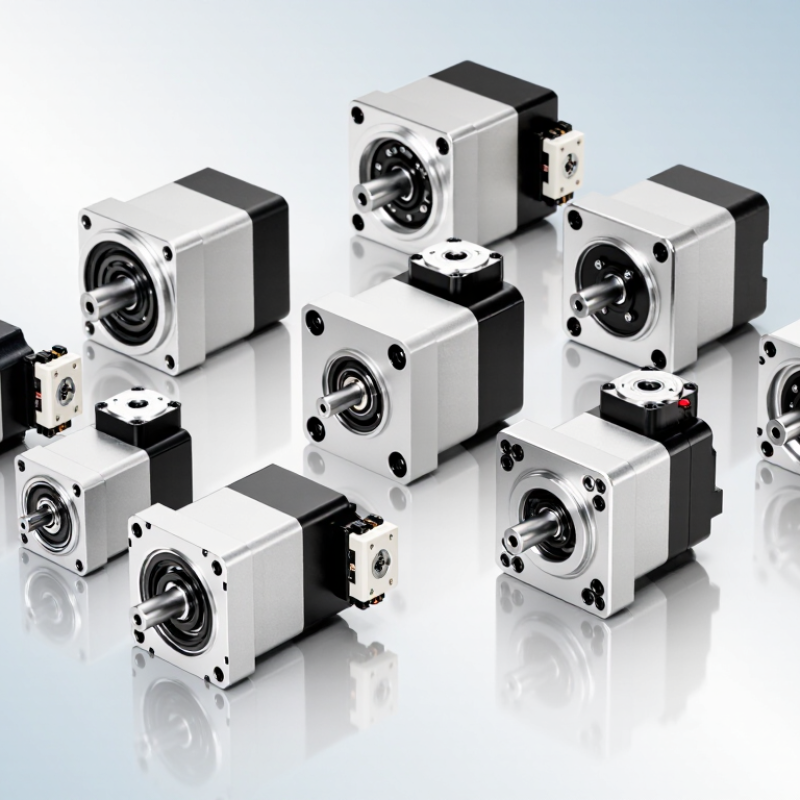
Micro rotary actuators convert electrical input into controlled angular motion in compact spaces. Common designs use brushed DC, brushless DC, or stepper motors, each suited to different control needs. A stepper moves in discrete increments, while a DC motor rotates continuously and often uses feedback for accurate positioning. Some units add a reduction gearbox to increase torque and reduce speed. Small does not mean simple.
A typical actuator contains a motor, gears, bearings, a shaft, and a protective housing. An encoder or Hall sensor may report shaft position, while a driver regulates current and direction. Gear material and bearing clearance matter: slight backlash can cause visible movement in a camera mount or small valve. Heat matters too. A sealed housing protects components, but can trap warmth during repeated operation.
Operating principles vary with the motor and control loop. An open-loop stepper uses timed current pulses without confirming its actual position. A closed-loop design compares sensor feedback with the target and corrects errors. This can help under changing loads, though it adds cost and calibration work. Specifications deserve scrutiny: stall torque differs from usable torque, and peak speed may drop under load. Bench testing with the real payload often reveals details a datasheet misses.
When comparing the China top 10 micro rotary actuator manufacturers, inspect measured performance under load, not just headline torque. A compact actuator rated at 0.08 N·m may appear suitable, but friction and acceleration can consume much of that margin. For an early screening estimate, engineers sometimes compare required torque with a higher rated value, then verify temperature and life through testing. Treat that estimate cautiously.
Rotation angle and speed define the motion a mechanism can actually deliver. A 90-degree movement at 60 degrees per second takes 1.5 seconds, before allowing for acceleration or settling. Ask whether the quoted speed applies under load, and whether the unit supports limited-angle or continuous rotation. ISO 9283:1998 provides methods for evaluating industrial robot performance, including position and path characteristics; its measurement mindset is useful when checking actuator claims. A tidy catalog table can still mislead.
Duty cycle matters just as much. IEC 60034-1 distinguishes continuous duty, S1, from intermittent periodic duty, S3; S3 expresses on-time as a share of the operating cycle. For example, two seconds active in a ten-second cycle equals 20% on-time, but does not prove thermal suitability. Test the actuator in its real enclosure and mounting orientation. Small details matter. Even a brief stall can change the result.
A useful profile of China’s micro rotary actuator suppliers should compare engineering capability, not just catalog size. Key details include rotation angle, rated torque, backlash, voltage, and operating life. Product lines may cover compact geared actuators, servo-driven rotary units, and miniature positioning modules. A few millimeters can matter when an actuator must fit inside a camera mount or laboratory instrument. Small differences matter.
Demand is supported by wider automation growth, though actuator sales are not the same as robot installations. The International Federation of Robotics reported 541,302 industrial robots installed worldwide in 2023, in World Robotics 2024. That figure signals continued investment in automation, but does not prove demand for any particular actuator type.
Supplier profiles should therefore distinguish tested specifications from marketing claims. Ask for torque curves, repeatability data, and performance under the intended load; published figures may not reflect a real assembly.
Tips: Compare samples under your actual voltage and load. Check backlash after repeated motion, not only at first use. Request clear test conditions and warranty terms. Supplier information can be uneven, and that deserves a second look.
When comparing China’s top micro rotary actuator manufacturers, treat an IEC 60529 IP code as a specific test result, not a general promise of durability. The code describes protection provided by an enclosure against dust and water under defined conditions. Check the full rating, such as IP54 or IP67, rather than relying on “waterproof” wording. Small details matter. Ask for the test report and confirm it covers the exact actuator model, connector, cable entry, shaft seal, and mounting arrangement you plan to buy. A report for a different configuration may not apply.
Review the test method, date, laboratory, sample identification, and pass criteria. Compare like with like: IPX7 immersion testing does not demonstrate resistance to water jets, and an IP6X dust result does not establish water protection. Not interchangeable. Look for notes on production revisions and whether the tested unit matches current specifications. A tidy comparison table can mislead if it lists ratings without evidence. It can be difficult to verify every detail, so record unanswered questions and request clarification before ranking suppliers. Also check whether the report explains the test setup; a cable routed differently or an unsealed opening can change the result. Judge the quality of the evidence, not just the highest number.
For a micro rotary actuator, start with the load at the actual pivot, not the headline torque. Estimate torque as force multiplied by lever-arm length, then allow for friction, acceleration, and any off-axis load. A small gripper moving a 30 mm arm can demand more torque than its light payload suggests. Do not treat stall torque as a continuous rating. A safety margin helps, though an oversized unit may waste space and power. Small margins matter.
Travel angle must match the mechanism’s full motion, including clearance at both ends. Check whether the actuator provides repeatable positioning or only end-stop motion; these are not interchangeable. Environment matters too: dust, washdown, vibration, and temperature can change service life. Specify ingress protection against IEC 60529, and check temperature limits in the actuator’s own test documentation. The IFR World Robotics 2024 report recorded 4,281,585 industrial robots in operation worldwide in 2023, up 10% year over year. That figure signals expanding automation, not a universal actuator specification. Match torque, angle, duty cycle, and enclosure rating to the real installation. I would still verify the load experimentally; friction estimates are often optimistic.
Technology-based selection guide. The profiles below are representative actuator categories, not ranked manufacturers or guaranteed product specifications; confirm ratings, duty cycle, and environmental limits with the supplier’s datasheet.
| Profile | Actuator type | Representative output torque | Travel angle | Load considerations | Environment and selection notes | Typical applications |
|---|---|---|---|---|---|---|
| 01 | Miniature positional servo | Approximately 0.05–0.20 N·m | Usually limited-angle; often around 90°–180° | Use the rated torque with a suitable safety margin; avoid unsupported side loads on the output shaft. | Check supply voltage, control signal, holding behavior, and temperature limits. Enclosure protection varies by model. | Small linkages, vents, educational mechanisms, and lightweight positioning. |
| 02 | Micro geared DC motor with position feedback | Approximately 0.02–0.30 N·m, depending on gearbox and motor | Continuous rotation; angle set by the control system | Select a gearbox for the required load and speed; confirm permissible radial and axial shaft loads. | Consider encoder resolution, gear backlash, stall current, and heat during repeated or stalled operation. | Compact positioning axes, small valves, and instrument mechanisms. |
| 03 | Micro stepper rotary actuator | Approximately 0.01–0.10 N·m, varying with size and speed | Multi-turn or indexed rotation; travel depends on the drive and mechanism | Compare available torque at the operating speed, not only holding torque; account for acceleration and load inertia. | Open-loop systems may lose position under overload; use homing or feedback where position assurance matters. | Dosing controls, optical adjustments, and repeatable small-angle indexing. |
| 04 | Worm-geared micro rotary actuator | Approximately 0.10–1.0 N·m, depending on reduction ratio | Limited-angle or continuous, depending on the output design | Useful for higher reduction; verify efficiency, backlash, permissible shaft load, and whether the load can back-drive the unit. | Check lubrication and operating-temperature range; self-locking behavior must not be assumed without confirmation. | Small dampers, adjustable fittings, and low-speed mechanisms. |
| 05 | Harmonic-drive miniature rotary actuator | Approximately 0.2–2 N·m for compact assemblies; verify model ratings | Continuous rotation or programmed limited travel | Assess rated, peak, and emergency-stop torque separately; support external loads according to the bearing arrangement. | Low backlash is possible, but accuracy, life, and allowable moment loads are design-specific. | Compact robot joints, precision fixtures, and inspection equipment. |
| 06 | Brushless micro rotary actuator with encoder | Approximately 0.03–0.50 N·m, depending on motor and gearing | Continuous rotation; position range depends on feedback and controller | Check continuous and peak torque, acceleration limits, and load inertia; use an appropriately sized driver. | Suitable for frequent operation when correctly sized; evaluate cooling, wiring, and sensor compatibility. | Small automation axes, camera mechanisms, and precision instruments. |
| 07 | Piezoelectric rotary actuator | Typically suited to very small torques; performance is mechanism-specific | Fine incremental motion; total travel depends on the actuator architecture | Confirm torque under the actual preload and contact conditions; not a general substitute for a high-torque motor. | Requires a compatible drive and careful control of preload, friction, and operating conditions. | Fine optical alignment, microscopy, and precision adjustment. |
| 08 | Miniature rotary solenoid | Typically specified by a short-stroke torque curve rather than continuous torque | Fixed stroke, commonly a short angular movement | Compare torque over the full stroke against spring force, friction, and mechanism load. | Check pulse duration, duty cycle, coil heating, return mechanism, and voltage tolerance. | Latches, selectors, and brief on/off rotary actions. |
| 09 | Miniature pneumatic rotary actuator | Torque depends on air pressure, vane or piston area, and mechanism | Commonly fixed limited-angle travel; confirm the actuator’s specified stroke | Size using torque at the minimum available pressure and include friction and starting-load requirements. | Requires clean, regulated compressed air; seal materials and ingress protection vary by model. | Light industrial clamping, switching, and short-stroke rotary automation. |
| 10 | Micro direct-drive rotary actuator | Application-specific; typically chosen where low backlash and direct output are priorities | Continuous rotation or controlled limited travel | Check motor torque across the speed range and ensure external radial and axial forces are carried by suitable bearings. | Evaluate encoder, controller, thermal limits, and the required protection against dust, moisture, or vibration. | Precision instruments and compact systems where gearbox backlash is undesirable. |
Compare torque under the expected load, not just the headline rating. Friction and acceleration can use much of a small margin. Test the complete mechanism.
Multiply the force by its distance from the pivot. A gripper with a 30 mm arm may need more torque than its light payload suggests. Include friction and off-axis loads.
About 1.5 seconds, before acceleration and settling. Actual timing can differ under load. Check the test conditions.
Confirm the required travel, including clearance at both ends. Check whether the actuator supports limited-angle movement or continuous rotation. They are not interchangeable.
It affects heating and operating life. Two seconds active in a ten-second cycle equals 20% on-time, but that alone does not prove thermal suitability. Small details matter.
Request torque curves, repeatability data, and clear test conditions. Compare samples at your intended voltage and load. Catalog figures can mislead.
Check dust, washdown, vibration, and temperature limits. Confirm the enclosure rating and test the actuator in its actual mounting orientation. I would recheck this.
No. Do not assume an actuator can sustain stall torque continuously. A brief stall can affect results, so verify performance through testing.
This guide explains how a Micro Rotary Actuator converts input energy into controlled angular motion, reviews common actuator types and components, and outlines the basic principles behind their operation. It also highlights the performance data that matters when evaluating options, including output torque measured in N·m, rotation angle, operating speed, and duty cycle. Understanding these figures helps clarify whether an actuator can meet the demands of a particular mechanism.
The article surveys ten manufacturers in China by describing their product focus without relying on brand claims, then offers a practical framework for comparing technical information. It explains how to interpret IEC 60529 IP ratings alongside relevant test data, while emphasizing that ratings should be considered in the context of actual operating conditions. The selection section connects torque, travel angle, load, and environmental requirements, helping readers narrow their choices and assess product suitability more consistently.