How to Choose a PHD Rotary Actuator?

Time:2026-09-25 Author:Sienna
0%

Choosing a Phd Rotary Actuator starts with the motion it must deliver, not the largest number on a catalog page. Define the load, rotation angle, cycle rate, and available air pressure. Then check the actuator’s torque at the pressure your system can actually maintain. A unit that looks adequate on paper may struggle when seals, tooling, or changing loads add resistance.

“Match the actuator to the real load and operating conditions, not the ideal test case.” This is an original illustrative quote, not a verified statement from a named industry expert. I can’t responsibly attribute it to a real specialist without a source. In practice, compare torque curves, mounting options, shaft style, and end-stop adjustment. Check the required life and duty cycle, too. Small details matter. A misaligned coupling can add wear; a poorly placed sensor can complicate setup. This guide will outline how to assess these factors, compare actuator configurations, and verify fit before purchase. It will also note where catalog data may not reflect your exact application. Selection is rarely perfect on the first pass. Careful measurements—and a review of the assumptions—help make the final choice more dependable.
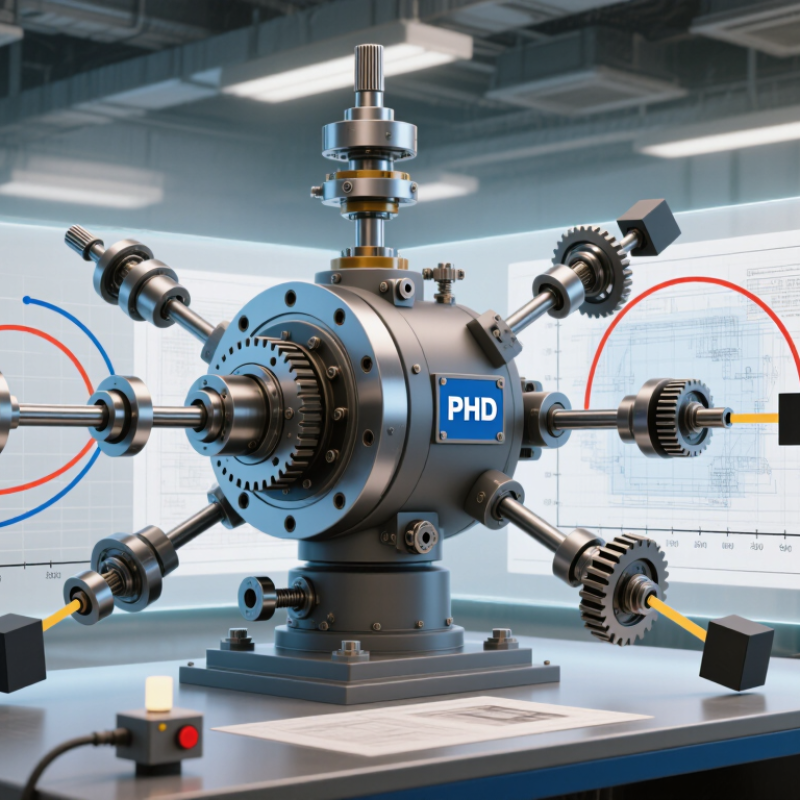
How to Choose a PHD Rotary Actuator?

Define the Application Requirements for a PHD Rotary Actuator

How to Choose a PHD Rotary Actuator?
Define the Application Requirements for a PHD Rotary Actuator

Start with the motion the actuator must produce. Record the required rotation angle, cycle time, and positioning accuracy. A 90-degree movement every few seconds differs greatly from a slow, frequent indexing task. Estimate the load’s mass and distance from the shaft, since both affect torque and inertia. Include friction, external forces, and any sudden stops. A first estimate is rarely perfect. Measure the real mechanism if possible.

Next, document operating conditions. Note available air or hydraulic pressure, mounting space, connection locations, and expected service life. Dust, moisture, temperature changes, and washdown can influence materials and seals. Check how the actuator will connect to sensors, valves, and the control system. If the load can strike a hard stop, consider cushioning or an external damping method. Small details matter.

Tips: Keep a simple test record. Write down pressure, cycle time, load, and observed stopping position. Compare these readings with the design targets before selecting a unit. Leave a margin for variation, but avoid oversizing without reason. It can waste energy and space. Recheck assumptions after the first installation; real-world friction often surprises people.

How to Choose a PHD Rotary Actuator: Define the Application Requirements

Illustrative sizing example: The assumed load torque (0.8 Nm), friction torque (0.2 Nm), and acceleration torque (0.3 Nm) add up to a 1.3 Nm operating demand. Applying a 1.5 design factor gives a 1.95 Nm target. These are example values, not product specifications. Before selecting an actuator, determine the actual load, required rotation angle, cycle rate, available pressure, mounting constraints, and operating environment; then verify performance against the actuator’s rated torque data.

Choose the Required Rotation Angle and Actuator Type

Choose the required rotation angle before comparing actuator styles. Common movements include 90, 180, and 270 degrees, but the mechanism must match the actual travel. Check the machine’s hard stops and the space available around the shaft. A fixture that needs a precise quarter-turn may not tolerate extra travel. Small differences matter.

Then match the angle and load to an actuator type. Rack-and-pinion designs are common for repeatable, limited-angle movement and offer a compact layout. Vane-style units can be compact too, though their torque and seal characteristics may affect suitability. Compare torque at the available air pressure, not just the actuator’s advertised maximum. Include load inertia, starting friction, and any force needed to hold position. Allow margin. Not excessive margin.

If the application needs adjustable travel, check whether built-in stops can be set and secured reliably. External stops may improve control, but they can add parts and alignment work. Cushioning can reduce impact at the end of rotation, especially with a heavy load or fast cycle. A common oversight is selecting the angle correctly while ignoring speed. If load data is incomplete, pause before sizing; a guess can lead to harsh stopping or inconsistent motion. A simple cycle test with the real load often reveals issues that a drawing misses.

Match Torque, Pressure, and Speed to the Application

Choosing a rotary actuator starts with the load at the shaft, not a catalog’s highest torque figure. Estimate the torque needed to move the load, then account for friction, linkage angles, and breakaway force. A hinged guard may move freely once open but resist rotation near its closed position. That matters. Add a reasonable margin, while avoiding automatic oversizing; excessive torque can make motion abrupt and difficult to control.

Compare the required torque with the actuator’s output at the pressure your system can reliably supply. Pressure can drop when other equipment operates, so peak supply pressure may not reflect real conditions. Check the operating range and confirm that the actuator can complete the move under the lowest expected pressure. Don’t overlook mounting stiffness or shaft connections; either can affect performance.

Speed depends on more than the actuator itself. Available airflow, valve capacity, tubing length, and load inertia all influence how quickly the shaft turns. A heavy fixture may accelerate slowly, even when the actuator’s rated speed looks adequate. Test the motion with the actual load if possible, and adjust flow controls gradually. I have seen calculated cycle times miss the mark. Real setups are rarely perfect. Check stopping behavior, too, especially where a rotating arm could strike a frame or product.

Check Mounting, Controls, and System Compatibility

A rotary actuator should fit the machine, not just the drawing. Check the mounting face, bolt pattern, shaft size, and available clearance. Even a small offset can make a coupling bind or complicate maintenance. Small details matter. For valve applications, ISO 5211 provides standardized interfaces for part-turn actuators, but a matching flange alone does not confirm torque or operating suitability.

Controls need equal attention. Confirm the required input signal, supply voltage or air pressure, feedback type, and response time against the controller. Ask what happens during power loss: does the mechanism hold position, move to a safe position, or require manual release? The answer depends on the application. It is easy to overlook until commissioning.

System context matters more than a catalog number. The International Federation of Robotics reported 541,302 industrial robot installations worldwide in 2023 in its World Robotics 2024 report, reflecting the scale of automated equipment that must work together. That figure is not actuator-specific, but it underscores why interface checks matter. Compare rated torque with the real load, including friction and start-up peaks. Check enclosure protection for dust, washdown, or outdoor exposure. A neat specification sheet can still miss a bracket, cable route, or unexpected load. Recheck the actual installation.

Assess Durability, Maintenance, and Support Needs

A rotary actuator may look simple on a drawing, but daily operating conditions reveal its limits. Check the expected cycle count, output torque, side loads, and operating temperature. A unit that handles occasional movement may wear quickly in a fast, repetitive cycle. Small details matter.

Durability depends on more than the housing. Ask what inspection intervals are recommended, which seals or bearings may need replacement, and whether lubrication is required. Confirm that service instructions and spare parts will remain available. A clear maintenance plan can prevent unexpected downtime. I would also check mounting alignment carefully; even a slight mismatch can add strain. It is easy to overlook.

Tips: Request written duty-cycle and maintenance guidance. Ask support staff how they diagnose noise, backlash, or leakage, and what measurements they need. Check response hours and parts lead times before purchase. Ask before buying. If the answers are vague, pause and compare options. The cheapest actuator is not always the lowest-cost choice over years of operation. Still, estimates depend on real conditions, and that deserves a closer look.

How to Choose a Rotary Actuator? — Assess Durability, Maintenance, and Support Needs

Assessment Area What to Check How It Affects the Choice Practical Selection Guidance
Required torque Load torque, friction, acceleration needs, and any pressure or process forces acting on the mechanism. An undersized actuator may stall or wear prematurely; excess capacity can add unnecessary cost and size. Calculate the operating torque and include an appropriate safety margin. Compare it with the actuator’s rated torque at the actual supply pressure.
Rotation angle Required travel, such as a partial turn or a full rotation, plus the accuracy needed at the end positions. Actuator designs differ in available rotation and end-position adjustment. Choose a model whose specified rotation matches the application. Confirm whether external stops or position feedback are needed.
Supply pressure Available and stable operating pressure, pressure losses, and the actuator’s specified operating range. Output torque can change with supply pressure, so a unit rated at a higher pressure may not deliver the same torque at a lower pressure. Size the actuator using the lowest expected pressure at the unit. Check the manufacturer’s operating limits and do not exceed them.
Cycle rate and service life Cycles per hour or day, operating hours, load profile, and the published life-test conditions. Frequent cycling and heavy or shock loads can increase wear on bearings, seals, and drive components. Compare cycle-life ratings only when test conditions are comparable. Ask whether the rating assumes a particular load, pressure, speed, or maintenance schedule.
Materials and corrosion resistance Housing, shaft, fasteners, seals, and coatings, along with exposure to moisture, chemicals, washdown, or outdoor conditions. Material suitability helps limit corrosion, seal damage, and premature replacement. Match materials and protective finishes to the actual environment. Check chemical compatibility and enclosure or ingress-protection ratings where relevant.
Bearings, seals, and lubrication Whether components are lubricated for life, require periodic lubrication, or have defined inspection or replacement intervals. These details influence routine service effort and performance over time. Review the maintenance instructions and operating limits. Confirm that the specified lubricant and replacement seals are suitable for the application.
Contamination and air quality Dust, water, oil, or other contaminants in the environment or compressed-air supply. Contamination can damage seals and internal surfaces or affect consistent operation. Follow the actuator’s air-quality requirements and use appropriate filtration or protection. Consider additional guarding in dirty or wet locations.
Mounting and load alignment Mounting pattern, shaft or coupling dimensions, permissible side loads, and alignment with the driven equipment. Misalignment or unsupported loads can place extra stress on bearings and drive parts. Verify interface dimensions and load limits before purchase. Use a suitable coupling and support external loads independently when required.
Maintenance access Space to inspect connections, adjust stops, remove the unit, and reach service components. Limited access can lengthen service time and make routine checks more difficult. Check the installation layout and document the clearance needed for inspection and removal before finalizing the design.
Repairability and spare parts Availability of repair instructions, seal kits, replacement parts, and local service options. Accessible service parts can reduce downtime when wear or damage occurs. Confirm part availability and expected lead times. Compare the cost and effort of repair with replacement over the planned service life.
Technical and after-sales support Access to sizing help, documentation, troubleshooting, warranty terms, and response support. Reliable support can help resolve installation or performance issues more quickly. Check documentation quality, warranty coverage, support hours, and service availability before selecting a supplier.

Note: Actuator performance, maintenance intervals, and service life depend on the specific design and operating conditions. Confirm all ratings and requirements in the product documentation for the selected model.

FAQS

What motion should I define before choosing a rotary actuator?

Record the rotation angle, cycle time, and positioning accuracy. A 90-degree turn every few seconds differs from slow indexing. Measure the real setup.

How does the load affect actuator selection?

Note the load’s mass and distance from the shaft. Include friction, external forces, and sudden stops when estimating torque and inertia. My first estimate may be off.

Which operating conditions should I check?

Confirm available air or hydraulic pressure, mounting space, and connection locations. Dust, moisture, temperature swings, and washdown can affect seals and materials.

When might cushioning or damping be useful?

Consider it when the load hits a hard stop. A sudden impact can strain the mechanism. Check the actual stopping position.

How can I test whether my assumptions are realistic?

Keep a simple record of pressure, cycle time, load, and stopping position. Compare readings with design targets after installation. Small details matter.

What durability details should I review?

Check cycle count, output torque, side loads, and temperature. A unit suited to occasional movement may wear faster in repetitive cycles.

What should a maintenance plan include?

Ask about inspection intervals, seals, bearings, and lubrication. Confirm service instructions and spare parts will remain available. It is easy to overlook alignment.

What support questions are worth asking before purchase?

Request written duty-cycle guidance. Ask how support staff diagnose noise, backlash, or leakage, and check response hours and parts lead times. Ask before buying.

Is the lowest-priced actuator always the best value?

Not necessarily. Compare maintenance needs and expected downtime over time. Estimates depend on real conditions, so I would check the numbers again.

Conclusion

Choosing a Phd Rotary Actuator starts with clearly defining the task it must perform. Consider the load, operating environment, available space, and how often the actuator will cycle. Then determine the required rotation angle and select an actuator type suited to the motion. These details help narrow the options before comparing performance specifications.

Next, match torque, operating pressure, and speed to the application, allowing for the demands of the load and the desired cycle time. Check that the mounting arrangement, controls, and connections are compatible with the existing system. Finally, consider durability, maintenance access, and the availability of technical support. Reviewing these factors together can help you select an actuator that operates reliably, fits the equipment, and meets both current needs and expected service demands.


Sienna

Sienna

Sienna is a skilled marketing professional with a deep expertise in our company’s core products and services. With a passion for innovation and detail, she plays a pivotal role in crafting insightful blog posts that not only highlight the unique features of our offerings but also provide valuable......