2026 How to Choose the Right Vane Rotary Actuator for Your Needs

Time:2026-06-22 Author:Charlotte
0%

Choosing the right Vane Rotary Actuator can significantly influence the efficiency and performance of your systems. The global market for actuators is projected to grow, with the Vane Rotary Actuator segment expected to capture a sizable portion. According to a recent report by Industry Research Group, demand for actuators in automation sectors will rise by 5% annually through 2026.

Expert opinions shed light on this complexity. Dr. Emily Carter, a leading automation specialist, states, "The right actuator can make or break your project's success." Her insight emphasizes the need for careful consideration in selection. Factors such as torque requirements, speed, and application type must be weighed.

Despite the available data, many users often overlook compatibility issues, leading to inefficiencies. It's crucial to fully understand your application needs and technical specifications. The wrong choice can result in increased costs and downtime. Selecting a suitable Vane Rotary Actuator is not only about current needs but also future scalability.
2026 How to Choose the Right Vane Rotary Actuator for Your Needs

Understanding Vane Rotary Actuators and Their Applications

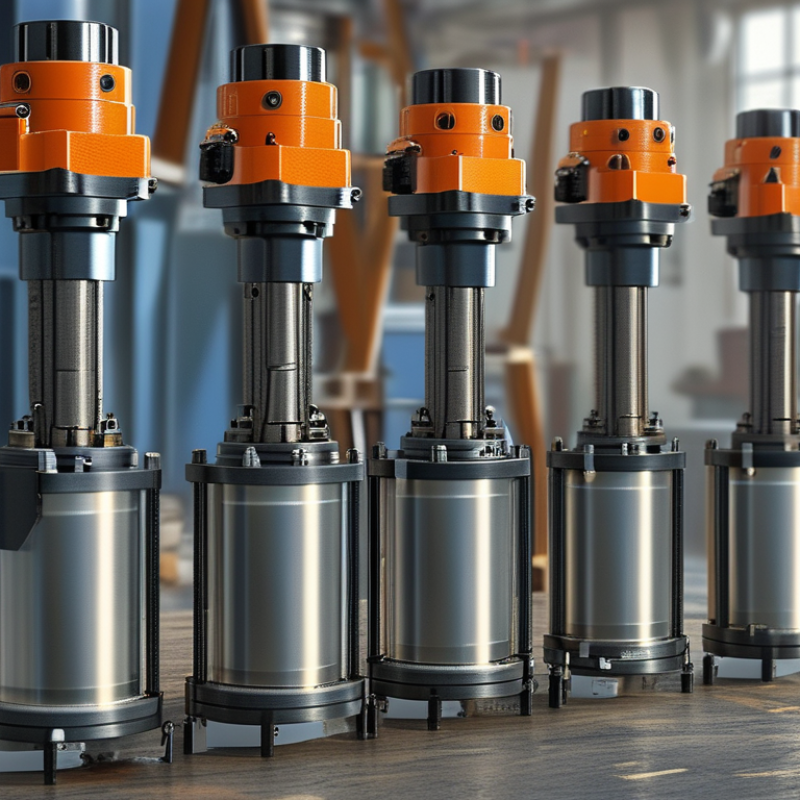
Vane rotary actuators are crucial components in various industrial applications. They convert rotary motion into linear movement, offering precise control. Understanding their design and functionality helps in selecting the right actuator for specific tasks. These actuators consist of a vane or paddle that moves within a cylindrical chamber. Air pressure or fluid pressure drives this motion, making them efficient for automation.

Applications range from robotics to HVAC systems. In robotics, they drive joints and manipulate tools. In HVAC, they control airflow and adjust dampers. Choosing the right actuator requires analyzing load requirements, speed, and environmental factors. However, not every actuator will be suitable for your application. It’s essential to test different models to find the best fit.

Consider the actuator's limitations. For example, they may struggle under heavy loads or extreme temperatures. Regular maintenance is also vital for reliable operation. Reflecting on these aspects helps ensure long-term performance and efficiency. Understanding actuator specifications guides the decision-making process, enhancing system reliability in real-world applications.

2026 How to Choose the Right Vane Rotary Actuator for Your Needs

Feature Description Applications Torque Range Operating Pressure
Compact Size Ideal for confined spaces Robotics, material handling 10-50 Nm 0-6 bar
High Torque Provides powerful rotary motion Heavy machinery, industrial automation 50-200 Nm 0-10 bar
Corrosive Resistance Materials suited for harsh environments Chemical processing, food industry 20-100 Nm 0-5 bar
Adjustable Speed Allows for fine-tuning of motion Textile machines, packaging 5-30 Nm 0-8 bar
High Speed Rapid cycle time for processes Assembly lines, conveyor systems 10-40 Nm 0-7 bar

Key Specifications to Consider When Choosing a Vane Rotary Actuator

Choosing the right vane rotary actuator involves understanding key specifications. One important factor is torque range. It affects the actuator's ability to handle different loads. Too low torque may lead to insufficient performance. A torque that is too high can cause unnecessary wear.

Another key specification is the operational environment. Temperature and moisture levels can impact actuator performance. Ensure the selected actuator can withstand these conditions. Consider the mounting configuration as well. A poor fit can result in operational inefficiency. Dimensions and weight are equally vital for seamless integration into existing systems.

Response time is also crucial. A quick response enables better control in applications. However, faster actuators can be more complex and costly. Think about your application’s needs carefully. Balancing speed, cost, and complexity may require deeper insight. Ultimately, the right choice hinges on a thorough assessment of these specifications. Evaluate your unique requirements to select an actuator that truly fits.

Comparing Different Types of Vane Rotary Actuators

Choosing the right vane rotary actuator is essential for achieving optimal performance. Comparing different types can help clarify your options. Vane rotary actuators are commonly used in various applications, such as aerospace and industrial machinery. Their design allows for precise control and high torque output.

One key factor to consider is the actuator's efficiency. Research indicates that the efficiency of vane rotary actuators can vary by 10-15% based on design and materials. For instance, double vane designs typically offer greater torque at lower speeds. However, they may not be suited for high-speed applications. Understanding the speed and torque requirements of your application is crucial.

Additionally, maintenance and durability should not be overlooked. Recent studies highlight that up to 30% of actuator failures occur due to poor maintenance practices. Users often find that routine inspections can significantly extend service life. Reflecting on these factors can lead to better decisions in selecting the right actuator for your needs.

Evaluating Performance Metrics for Vane Rotary Actuators

When selecting a vane rotary actuator, evaluating performance metrics is crucial. Key metrics include torque output, speed, and response time. Torque output indicates the force the actuator can exert. A higher torque rating typically means greater mechanical power. It's important to match this with your specific application needs, as excessive torque can lead to inefficiencies.

Speed and response time are equally vital. The actuator must respond quickly to control signals, ensuring precise movements. Measure the time it takes for the actuator to reach its full range of motion. Sometimes, manufacturers provide response times in specifications, but actual performance can vary. Testing in real-world conditions may reveal discrepancies.

Consider environmental factors as well. Vane rotary actuators may perform differently in high temperatures or humid conditions. Look into materials and protective features that ensure durability in your intended setting. Selecting the right actuator involves trade-offs; some high-performance models may lack energy efficiency. Regularly reviewing these metrics helps in making informed decisions tailored to your operational requirements.

Performance Metrics of Vane Rotary Actuators

Assessing Cost-Effectiveness and Compatibility with Your System

When selecting a vane rotary actuator, cost-effectiveness and system compatibility are crucial aspects to consider. The average life cycle cost of actuators can vary significantly. According to a recent industry report, maintenance costs account for nearly 30% of total ownership costs. Therefore, it is essential to choose an actuator that minimizes these expenses while maximizing performance.

Compatibility with your existing system should not be overlooked. A study from Sector Analysis in 2022 highlighted that nearly 40% of actuator failures stem from integration issues. Ensure your actuator aligns with your control systems, especially regarding communication protocols and physical dimensions. Incompatibility can lead to unexpected downtime and costly repairs.

Understanding specific application requirements also aids in making informed decisions. For instance, if precision is vital, then investing in a higher-end actuator might be beneficial. Consider environmental factors as well. A dusty or wet environment may require additional protection, which can influence both cost and compatibility. Thus, while lower prices might be tempting, they often come with hidden trade-offs that could impact overall system performance.

FAQS

: What is the importance of choosing the right vane rotary actuator?

: The right actuator ensures optimal performance in various applications, like aerospace and industrial machinery.

How does actuator efficiency vary?

Efficiency can vary by 10-15% based on design and materials, affecting torque and speed.

What is a double vane design?

A double vane design offers greater torque at lower speeds but may not be suitable for high-speed use.

Why is maintenance important for actuators?

Poor maintenance can lead to actuator failures, with studies showing 30% of failures stem from this issue.

How can routine inspections help?

Regular inspections can significantly extend the service life of the actuator, impacting overall performance.

What factors affect the cost-effectiveness of an actuator?

Maintenance costs can account for nearly 30% of total ownership costs, making it vital to choose wisely.

How important is system compatibility?

Nearly 40% of actuator failures are due to integration issues, so compatibility with control systems is crucial.

What should be considered for specific applications?

Precision needs and environmental conditions can influence actuator choice, impacting both cost and functionality.

Are lower-priced actuators a good choice?

Lower prices can be tempting, but they may come with hidden trade-offs affecting system performance.

What role do communication protocols play in actuator selection?

Ensuring the actuator aligns with existing communication protocols is essential to avoid unexpected downtime.

Conclusion

In the article titled "2026 How to Choose the Right Vane Rotary Actuator for Your Needs," the focus is on guiding readers through the essential considerations for selecting the most suitable vane rotary actuator for various applications. It begins with an overview of what vane rotary actuators are, highlighting their functionality and diverse uses in industrial settings. Key specifications such as torque, speed, and size are discussed, providing a foundation for making informed decisions.

The article further compares different types of vane rotary actuators and emphasizes the importance of evaluating their performance metrics, including efficiency and reliability. Additionally, it assesses cost-effectiveness and compatibility with existing systems, ensuring that users can identify the right actuator that meets their operational needs without unnecessary expenditures. Ultimately, this comprehensive guide serves as a valuable resource for anyone looking to integrate vane rotary actuators into their projects.

Charlotte

Charlotte

Charlotte is a seasoned marketing professional with a deep understanding of the company's portfolio and a passion for elevating its presence in the market. With a keen eye for detail and a commitment to excellence, she ensures that our professional blog is regularly updated with insightful articles......