Choosing the best Rotary Actuator 12v from China requires more than comparing prices or browsing product photos. The correct choice depends on torque, rotation angle, duty cycle, backlash, current draw, noise, and environmental protection. A compact actuator may look ideal on a workbench, yet stall when a valve becomes stiff or a mechanism faces side loading. Small details matter.
China has become a major automation manufacturing center. The International Federation of Robotics reported 276,288 industrial robot installations in China during 2023, representing about 51% of global installations. This scale supports a broad supplier base for motors, gearboxes, control systems, and compact actuators. However, production volume does not guarantee equal quality. The best supplier should provide measurable test data, not only attractive specifications.
Ask for torque curves, endurance results, wiring diagrams, IP ratings, and current measurements under load. Confirm whether the rated torque is continuous or only a short peak. Also check encoder accuracy, limit-switch reliability, gearbox material, and response consistency across samples. ISO 9001 certification can indicate controlled processes, but it cannot replace independent product testing. For demanding applications, suppliers should support sample validation, factory audits, traceable components, and clear after-sales procedures.
A low price can look impressive. It may also conceal weaker gears or inconsistent assembly. That risk deserves attention. Reports from MarketsandMarkets and other automation researchers continue to show strong demand for compact motion-control equipment, but market forecasts cannot identify the best individual factory. A careful evaluation must combine published data, hands-on testing, and transparent communication. Some evidence may remain incomplete, especially when suppliers avoid sharing failure-rate records. That is where professional judgment becomes essential.
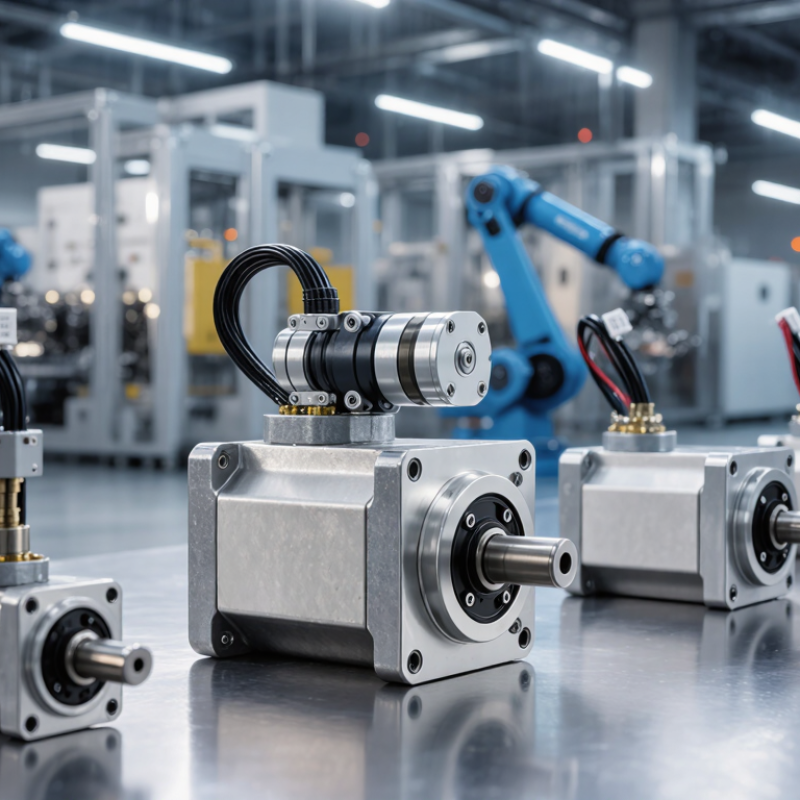
What is the best 12V rotary actuator from China? The honest answer depends on your load, movement, and installation space. Torque describes turning force, measured in newton-metres. Calculate the required torque with the lever length, then add a practical safety margin. Starting loads can exceed running loads. A small actuator may rotate an outdoor vent smoothly, yet stall against ice or misalignment. Speed is usually listed without a load. That number can fall sharply under resistance. Ask for loaded speed, not only no-load speed. Reliable suppliers should provide test conditions, wiring details, and current data.
Duty cycle protects the motor from heat. A rating such as 25% may mean 15 seconds running and 45 seconds resting, depending on the manufacturer’s definition. Confirm the exact timing. Continuous operation needs a different design. IP ratings describe resistance to dust and water, not chemical exposure or impact. IP65 can handle dust and water jets, but it is not automatically suitable for immersion. During field testing, check noise, backlash, end-stop accuracy, and temperature after repeated cycles. Real conditions are often less polite than the laboratory. That is where a promising actuator can disappoint.
Tips: Request a sample before bulk purchasing. Test it at 12V, minimum voltage, and maximum expected load. Measure start-up current with a meter. Check whether the gearbox holds position without power. Ask for a clear IP test report and cycle-life evidence. Leave room for wiring and heat. I would also document every assumption; overlooked friction is a common, expensive mistake.
12V Rotary Actuators Explained: Torque, Speed, Duty Cycle, and IP Ratings
| Actuator Class | Typical Output Torque | Typical Speed | Typical Current | Duty Cycle | Common IP Rating | Typical Applications |
|---|---|---|---|---|---|---|
| Compact gear-driven | 2–10 N·m | 10–60 rpm | 1–5 A | Intermittent; commonly 10–25% | IP44–IP54 | Vents, louvers, small valves, light automation |
| Medium planetary gear | 10–40 N·m | 5–30 rpm | 3–12 A | Intermittent; commonly 10–20% | IP54–IP65 | Dampers, access systems, adjustable machinery |
| High-torque worm gear | 40–150 N·m | 1–15 rpm | 8–30 A | Short-duration; commonly 5–15% | IP55–IP66 | Heavy dampers, gates, industrial positioning |
| Precision closed-loop | 5–50 N·m | 5–100 rpm | 2–15 A | Application-dependent; often 20–50% | IP54–IP65 | Robotics, positioning, inspection equipment |
| Marine or outdoor sealed | 10–100 N·m | 2–25 rpm | 5–25 A | Intermittent; thermal limits apply | IP66–IP67 | Outdoor equipment, marine controls, exposed mechanisms |
Select an actuator with a continuous operating torque above the calculated load torque. Include friction, acceleration, wind load, and a practical safety margin.
A 12V actuator rated for intermittent duty should not be operated continuously. Higher torque, speed, ambient temperature, and frequent cycling increase motor heating.
IP54 provides limited dust protection and splash resistance. IP65 protects against dust ingress and water jets, while IP67 adds temporary immersion protection under specified test conditions.
Common options include two-wire polarity reversal, limit switches, potentiometer feedback, Hall sensors, and encoders. Confirm the controller and wiring are compatible with the rated current.
Note: The figures above are representative engineering ranges for 12V DC rotary actuator categories, not specifications for a particular manufacturer or brand. Actual performance depends on gear ratio, load direction, operating temperature, mounting arrangement, and control method.
Many compact automation tasks fit 20–100 N·m of torque. Choose a rating above the actual load. A 25–50% safety margin helps manage starting resistance, misalignment, and cold grease. For a 60 N·m load, an actuator near 80 N·m may be safer.
Choose around 5 rpm for controlled movement and stronger positioning. Speeds near 30 rpm require closer checks of gearbox heat and stopping accuracy. Faster movement is not always better. I might prefer slower motion when the load must stop precisely.
At 20% duty, ten minutes allows only two powered minutes. Confirm the supplier’s test conditions. “Intermittent” can describe different operating limits. Ask about load, voltage, temperature, and cycle timing.
Request quality-process certificates, electrical conformity documents, and restricted-substance evidence. These documents support traceability. They do not guarantee equal performance from every unit. Ask for declarations and material records, not only printed symbols.
It is useful only when the conditions are clear. Check voltage, load, duty cycle, temperature, travel angle, and failure criteria. A no-load test may hide heat buildup and increasing backlash. The number sounds impressive. The details matter more.
Worm gears suit holding tasks, valves, dampers, and long stationary periods. They can resist reverse movement under moderate loads. Friction may reduce efficiency and create heat. Planetary gears usually offer smoother rotation, higher efficiency, and faster movement. They may back-drive after power removal.
A potentiometer provides simple angular feedback. An encoder usually supports finer measurement and longer service life. Both need correct calibration and signal protection. Feedback cannot fix poor controller timing. I once focused on torque and underestimated feedback delay.
Test current, noise, backlash, temperature, and positional repeatability under the intended load. Check startup voltage drop at the 12V supply. Inspect the connector, shaft seal, mounting holes, and bracket flexibility. Three samples provide better evidence than one. Still, installation conditions may differ.
Choosing the best Rotary Actuator 12v from China requires more than comparing price and basic specifications. A suitable unit should match the application’s torque, speed, and operating frequency, with typical requirements ranging from 20–100 N·m of torque, 5–30 rpm, and a 10–20% duty cycle. IP protection, current draw, noise, backlash, and available load margin are also essential for dependable performance in real-world environments.
Quality verification should include documented ISO 9001 manufacturing processes, CE and RoHS compliance, and meaningful endurance testing, such as 50,000-cycle evaluations. Worm-gear designs may provide strong holding force and compact installation, while planetary-gear systems can offer higher efficiency and smoother operation. Position feedback is valuable when accurate control is needed. Before purchasing, buyers should confirm operating limits, warranty coverage, testing records, and compatibility with the control system to ensure reliable long-term service.

 Weitai Hydraulic