7 Vane Rotary Actuator Buying Tips for Buyers?

Time:2026-10-31 Author:Isabella
0%

A Vane Rotary Actuator can turn a compact package into steady, repeatable motion. But choosing one from a catalog is not just a torque comparison. Buyers need to match the actuator to the real load, operating pressure, rotation angle, cycle rate, and available mounting space. A unit that looks suitable on paper may struggle when a valve sticks or a linkage adds friction. Small details matter.

“Check the required torque at the actual operating conditions, not only the catalog maximum.” This is a practical selection principle, not a verified quotation from a named expert. No source material was supplied to confirm an expert’s name or exact words, so attributing it to a person would risk misleading readers.

This guide examines seven buying considerations, including torque margins, rotation limits, port placement, materials, sealing, controls, and supplier support. Look closely at the installation, too. A tight pipe bend or an awkward bracket can turn a promising choice into a slow maintenance job. Ask how the actuator performs across the full duty cycle, not just during a clean, unloaded demonstration. Request drawings and operating data. Compare them with your actual application.

And be candid about uncertainty. Loads change. Conditions drift. A careful buyer leaves room for those realities, then confirms the final choice with an application engineer.
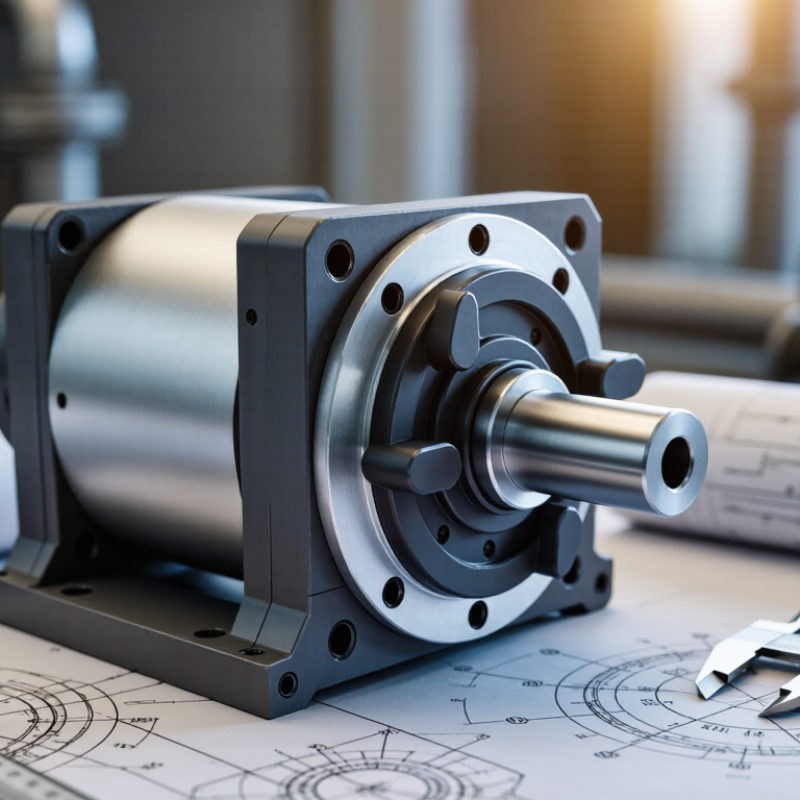
7 Vane Rotary Actuator Buying Tips for Buyers?

Understand Vane Rotary Actuator Types and Operating Principles

Vane rotary actuators convert fluid pressure into limited shaft rotation, rather than continuous spinning. Inside the housing, a vane fixed to the output shaft separates pressure chambers. Air or oil enters one chamber and pushes the vane; the opposite chamber exhausts or returns fluid. Reverse the ports, and the shaft turns back. That is the basic principle.

Single-vane designs commonly provide a wider rotation angle, while double-vane versions often deliver more torque within a smaller turning angle. Actual angles depend on the design and its stops. Pneumatic models suit quick, clean cycles, while hydraulic units can handle higher loads but require careful fluid control. Neither choice is automatically better.

Before buying, compare required torque at the lowest supply pressure, not just the headline rating. Check the drawing for rotation angle, shaft dimensions, port location, seals, and mechanical stops. On a test bench, an actuator may move a clamp through a short arc; pressure drop or side loading can change performance. Ask how torque is specified and whether cushioning is available. Specifications can still leave gaps. I would verify mounting space and duty cycle twice, since a datasheet cannot show every awkward installation.

Define Torque, Rotation Angle, and Pressure Requirements

Before selecting a seven-vane rotary actuator, calculate the torque needed at the output shaft. Include the load’s weight, starting friction, inertia, and any losses in the linkage. Measure the real load. Then compare its torque demand with the actuator’s rating at your actual operating pressure, not just a catalog’s best-case figure. Keep a suitable margin for changing loads and wear. I have seen tidy calculations miss sticky hinges; real equipment can be less tidy.

Confirm the required rotation angle and how accurately the actuator must stop. A quarter-turn valve may need a different configuration from a mechanism that travels through a wider arc. Check whether external stops or position sensors are required, and make sure the actuator can reach the needed angle without forcing the connected parts. Pressure matters too: note normal, minimum, and maximum supply pressure, including losses through long or narrow hoses. Low pressure can reduce available torque. Pressure spikes deserve attention.

Tips: Write down torque, angle, and pressure before requesting a quotation. Verify whether torque figures describe starting or running conditions, and check the specified pressure range. If your measurements are uncertain, say so; an assumed value may be the weakest part of the selection.

Vane Rotary Actuator Buying Guide: Define Torque, Rotation Angle, and Pressure

Illustrative design inputs for four common use cases. Torque is shown in N·m; hover over a bar to see the example rotation angle and operating pressure. These are example requirements, not product ratings.

When selecting an actuator, check that its torque at the actual operating pressure meets the load requirement throughout the specified rotation angle. Account for friction, linkage geometry, operating conditions, and an appropriate safety margin.

Match Materials and Seals to the Operating Environment

A vane rotary actuator may sit beside a dry machine, or work near washdown spray, dust, and changing temperatures. That difference matters. A coated aluminum housing can suit many indoor applications, while stainless steel may be worth considering where moisture or cleaning chemicals are common. Check the actual chemical exposure, not just the room’s humidity. Even a small amount of trapped moisture around fittings can encourage corrosion over time.

Seal choice deserves the same attention. Nitrile seals often suit mineral-oil systems, while EPDM is commonly considered for water-based service. Fluoroelastomers tolerate many oils and higher temperatures, but they are not compatible with every chemical. PTFE has broad chemical resistance, yet its sealing arrangement and friction behavior need review. Ask the supplier for compatibility data covering the exact fluid, concentration, and operating temperature. “Chemical resistant” is too vague.

Think about temperature swings, pressure, cycle rate, and how often the actuator will be cleaned. A seal that works during a short test may age faster under continuous cycling or heat. I might be overcautious, but request written limits for both the housing and seals. Also check whether lubricant, process fluid, and cleaning agents can contact the same components. That detail is easy to miss. Do not choose materials from a general chart alone; confirm the full operating conditions with the actuator manufacturer.

Check Mounting, Connections, and System Compatibility

Before ordering a vane rotary actuator, compare its mounting face, bolt pattern, shaft shape, and available rotation angle with the driven equipment. For valve service, check whether the interface follows ISO 5211; not every actuator uses that mounting arrangement. Measure the coupling, too. Even a small mismatch can cause binding or side-load the shaft. Small details matter. Confirm the actuator’s torque at the system’s minimum supply pressure, not just its headline rating. Include breakaway torque and any load changes during operation.

Check port size, thread type, supply pressure, and required airflow against the existing circuit. A fitting that looks close may still leak or restrict flow. The U.S. Department of Energy’s Improving Compressed Air System Performance: A Sourcebook for Industry reports that compressed air uses about 10% of industrial electricity, reaching up to 30% at some facilities. That makes leakage and excessive air demand worth checking when selecting actuator capacity. Also verify temperature limits, duty cycle, and cushioning requirements against the actual operating environment. A paper match is not always a field match; test the assembly through its full rotation before commissioning.

Compare Performance, Maintenance Needs, and Supplier Support

Compare a seven-vane rotary actuator at your actual supply pressure, not just its maximum rating. Check output torque, rotation angle, cycle speed, duty cycle, temperature range, air use, and mounting compatibility. Request torque curves and test conditions. A figure without its pressure and load assumptions is hard to use. Ask for evidence.

For maintenance, inspect how seals are replaced, whether lubrication is required, and how easily technicians can reach ports and fasteners. Ask about expected cycle life and available repair kits, but treat life figures as test-dependent. The U.S. Department of Energy’s Improving Compressed Air System Performance: A Sourcebook for Industry reports that leaks can waste 20–30% of compressor output in many plants. That is a system-level warning, not an actuator-specific failure rate. Check fittings and actuator leakage during commissioning.

Supplier support matters after installation. Confirm spare-part availability, technical response times, and whether the supplier can provide dimensional drawings, troubleshooting steps, and written performance data. Ask how they handle a unit that stalls under load. A quick answer helps; a documented answer is better. I would also compare warranty terms, though they cannot replace clear test data. Keep the evaluation sheet, including operating pressure and measured cycle time, so later maintenance has a useful baseline.

7 Vane Rotary Actuator Buying Tips for Buyers: Compare Performance, Maintenance Needs, and Supplier Support

# Buying Tip What to Compare or Verify Why It Matters Questions to Ask the Supplier
1 Size for the required torque Compare the actuator’s rated torque at the minimum available operating pressure with the torque required by the load. Include friction, inertia, and the application’s expected variation. Available torque depends on operating pressure and actuator design. Selecting from a maximum-pressure rating alone may leave insufficient torque when system pressure drops. Can you provide a torque-versus-pressure rating and help verify the required safety margin for this load?
2 Confirm rotation angle and configuration Check the required travel angle, end-stop arrangement, and whether a single-vane or multi-vane design suits the application. Verify that the specified angle is achievable with the selected configuration. Vane configuration affects available torque, package size, and rotation range. Travel options and adjustment methods vary by actuator design. What is the usable rotation range, and are adjustable stops or position feedback options available?
3 Check pressure, fluid, and temperature compatibility Verify the operating-pressure range, working fluid or gas, ambient and media temperatures, and seal and housing materials. For pneumatic units, confirm air-quality requirements. Pressure limits and material compatibility affect safe operation and seal life. Contamination or unsuitable fluid can increase wear or cause leakage. Which fluids, temperature range, and air-quality conditions are approved for this model?
4 Match speed and duty cycle Compare the required cycle rate, operating frequency, load inertia, and desired travel time with the actuator’s published limits. Check whether speed control or end-of-travel cushioning is needed. Rapid cycling and high inertia can increase impact loads and wear. Flow controls and cushioning may help manage motion, but must be suitable for the application. What cycle-rate limits apply, and what provisions are recommended for controlling speed and end-stop impact?
5 Evaluate mounting and external loads Confirm the mounting pattern, shaft or drive interface, envelope, port orientation, and any permitted radial or axial loads. Check whether the application needs separate load-support bearings. Installation constraints can affect alignment and service access. Many actuators are intended to deliver rotary torque, not to support every external load from the driven equipment. Can the actuator tolerate the specified side and axial loads, or should the equipment provide separate support?
6 Review maintenance and serviceability Ask about inspection intervals, lubrication requirements, expected seal replacement procedures, cleanliness needs, and availability of service parts or repair instructions. Maintenance needs depend on the design and operating conditions. Clear service guidance and accessible parts can reduce downtime over the actuator’s service life. Which components are serviceable, what maintenance is recommended, and are repair kits and technical instructions available?
7 Assess documentation and supplier support Compare dimensional drawings, installation and operating instructions, performance data, lead-time information, warranty terms, and access to application engineering and replacement parts. Complete documentation helps with correct integration and troubleshooting. Responsive technical support and parts availability can simplify commissioning and future maintenance. Can you provide drawings and ratings for the proposed configuration, plus support for sizing, commissioning, and spare-part planning?

FAQS

How does a vane rotary actuator work?

Fluid pressure pushes a vane inside a housing. The vane turns the output shaft through a limited angle. Reverse the ports, and it turns back.

What is the difference between single-vane and double-vane designs?

Single-vane designs often allow a wider rotation angle. Double-vane designs often provide more torque over a smaller angle. Exact limits depend on the design.

Should I choose a pneumatic or hydraulic actuator?

Pneumatic models suit quick, clean cycles. Hydraulic models can handle higher loads but need careful fluid control. Neither is always better.

How should I estimate the required torque?

Include the load’s weight, starting friction, inertia, and linkage losses. Compare the result with the actuator’s torque rating at your lowest operating pressure. Leave a suitable margin.

Why does operating pressure matter?

Low pressure can reduce available torque. Check normal, minimum, and maximum pressure, including losses through long or narrow hoses. Pressure spikes matter too.

How can I confirm the required rotation angle?

Check the mechanism’s full travel and stopping needs. A quarter-turn valve may need a different setup from a wider-arc mechanism. Avoid forcing connected parts.

What details should I check before ordering?

Review the drawing for shaft dimensions, port locations, seals, stops, and mounting space. Check the duty cycle as well. Drawings can miss awkward fit problems.

What should I verify during testing?

Watch the actuator move a real load, such as a clamp through a short arc. Pressure drops and side loading can change performance. Sticky hinges can upset neat calculations. I would check those twice.

Conclusion

Choosing the right Vane Rotary Actuator starts with understanding how different actuator types work and how their operating principles fit your application. Define the torque, rotation angle, and pressure requirements before comparing options, since these factors affect both performance and suitability. Consider the operating environment as well: material and seal choices should be appropriate for exposure to temperature changes, moisture, dust, or other working conditions.

Next, verify that the actuator’s mounting style, port connections, and dimensions are compatible with your existing equipment. Compare expected performance alongside maintenance requirements, including how easily components can be inspected or serviced. Finally, assess the supplier’s technical support and access to documentation or replacement parts. Reviewing these considerations together can help buyers select an actuator that meets system needs, operates reliably, and is practical to maintain over time.


Isabella

Isabella

Isabella is a dedicated marketing professional with a sharp focus on driving brand growth and engagement through strategic content creation. With an extensive background in digital marketing, she combines her passion for storytelling with her keen understanding of industry trends to deliver......